AGNC Investment's Major Milestone 🏛️
AGNC Investment (NASDAQ: AGNC) has officially joined the S&P MidCap 400 Index. This inclusion, effective before the market opened on Sept. 21, marks a significant evolution for the mortgage REIT. It's not just about prestige; it's a structural shift in how the stock is traded and held.
Why This Matters
By entering the MidCap 400, AGNC also gains membership in the broader S&P Composite 1500, S&P 900, and S&P 1000 indexes. This multi-index inclusion is a testament to the company's scale, which CEO Peter Federico describes as a pivotal moment in their 18-year history.
Key Takeaway: Index inclusion forces passive funds (like ETFs) to buy the stock, potentially providing a floor for the share price.
For income investors eyeing the hefty 14.6% dividend yield, this news raises a critical question: Does this make the dividend safer? Let's dive into the mechanics.

The Mechanics of Index Inclusion ⚙️
When a stock joins a major index like the S&P MidCap 400, it triggers a mechanical buying event. Index funds and ETFs that track the S&P MidCap 400—such as the Vanguard S&P Mid-Cap 400 ETF—are required to purchase shares of AGNC to mirror the index's performance.
The Institutional Ownership Boost
This creates immediate demand, often leading to a short-term price bump. More importantly, it increases institutional ownership, which can lead to:
- Lower Volatility: Institutional holders tend to be less reactive to daily noise.
- Liquidity: Increased trading volume makes it easier for large players to enter and exit positions.
- Price Support: The constant inflow of passive capital provides a buffer against sharp declines.
However, for a mortgage REIT (mREIT) like AGNC, the story is more complex than just supply and demand. The company's business model involves borrowing money to buy mortgage-backed securities (MBS). The spread between their borrowing cost and the yield on these securities drives their profit.
The Capital Raising Advantage
A higher stock price makes it easier for AGNC to raise equity capital. In the mREIT world, this is crucial. If AGNC can issue new shares at a premium to book value, it accretes value for existing shareholders. The index inclusion provides a tailwind here, potentially making it easier for the company to sustain its operations and dividend payouts.
The market is divided on whether index inclusion is a game-changer for AGNC's dividend safety. Here's the debate:
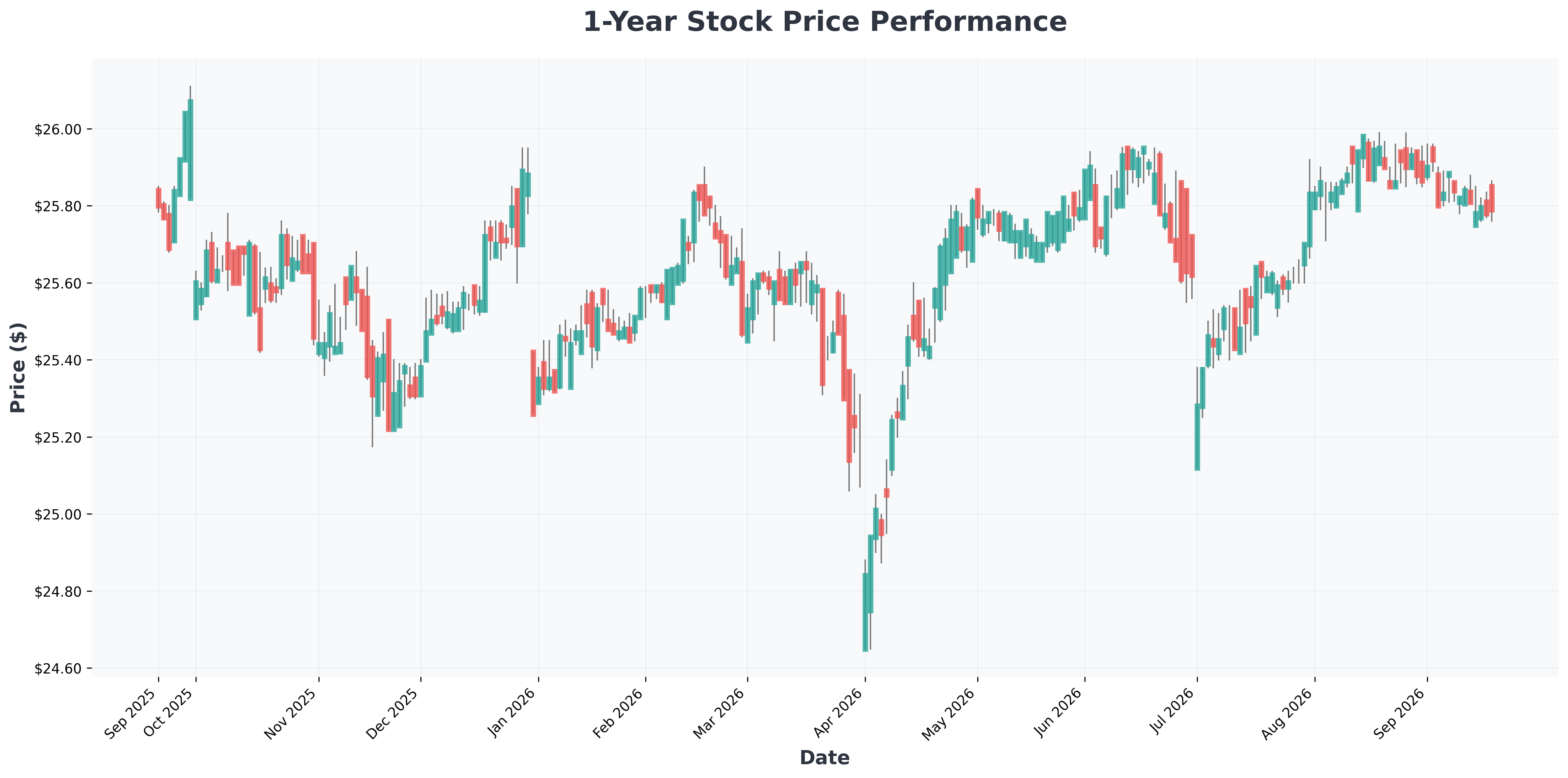

Dividend Sustainability: The Real Question 💰
Despite the positive news, the core investment thesis for AGNC remains unchanged: it is a high-risk, high-reward income play. The 14.6% yield is attractive, but it comes with a history of volatility.
Current Dividend Status
AGNC currently pays a monthly dividend of $0.12 per share. This rate has been maintained since April 2020, when the company reduced it from higher levels. While the rate is stable, the yield has climbed due to a 20% slump in the share price earlier this year.
The Interest Rate Headwind
Mortgage REITs are highly sensitive to interest rates. The recent environment has been challenging, with inflation resurgence prompting the Federal Reserve to hike rates. This compresses the spread AGNC earns on its investments.
Critical Insight: AGNC's dividend sustainability hinges on its ability to earn a return on equity (ROE) above its cost of capital. Management noted on their Q2 earnings call that current returns are in the 15% to 17% range, which aligns with their dividend economics.
Scenario Analysis
| Scenario | Impact on AGNC | Dividend Implication |
|---|---|---|
| Bull Case | Fed pauses rate hikes; spreads widen. | Dividend remains safe; price recovers to $12+. |
| Base Case | Rates stabilize; AGNC maintains ROE. | Dividend held steady; stock trades sideways. |
| Bear Case | Inflation persists; Fed hikes again. | ROE drops below cost of capital; risk of dividend cut. |
Historically, mREITs that trade at a discount to book value struggle to raise capital. The index inclusion helps narrow that discount, but it doesn't immunize the company from macro trends.
📊 In-Depth Fundamental Analysis
| Company | Share Price | P/E Ratio | P/B Ratio | ROE | Operating Margin (OPM) | Revenue Growth |
|---|---|---|---|---|---|---|
| AGNCL (AGNC) | $25 | 0.00 | 2.78 | 19.80% | 95.61% | 0.00% |
| AGNCM (AGNC) | $25 | 0.00 | 2.80 | 19.80% | 95.61% | 0.00% |
| AGNCN (AGNC) | $26 | 0.00 | 2.84 | 19.80% | 95.61% | 0.00% |
| AGNCO (AGNC) | $26 | 0.00 | 2.83 | 19.80% | 95.61% | 0.00% |
| AGNCP (AGNC) | $25 | 0.00 | 2.79 | 19.80% | 95.61% | 0.00% |
| AGNCZ (AGNC) | $25 | 0.00 | 2.79 | 19.80% | 95.61% | 0.00% |
| AGNC (AGNC) | $10 | 4.98 | 1.10 | 19.80% | 95.61% | 0.00% |

The Verdict: A Safer Bet, But Not Risk-Free 🛡️
AGNC Investment's inclusion in the S&P MidCap 400 is a structural positive. It validates the company's scale and ensures a steady stream of passive buyers for its stock. This should provide some price support and make it easier for the REIT to raise capital.
However, investors must not confuse index inclusion with dividend safety. The dividend is driven by the spread between mortgage yields and borrowing costs, not by index membership. With the Fed's recent rate hikes and inflation concerns, the margin pressure is real.
Actionable Takeaways
- Income Investors: The 14.6% yield is attractive, but position sizing is key. Treat this as a satellite holding, not a core bond replacement.
- Traders: Watch for the initial index rebalancing volume, but be aware of the broader downtrend in share price.
- Long-Term Bulls: The ROE of 15-17% is the number to watch. If it drops below 10%, the dividend is at risk.
For more insights on how passive investment trends are reshaping markets, check out our analysis on Citizen Services AI Market Set to Hit $601 Billion by 2035. Additionally, if you're looking for growth plays to balance this high-yield risk, see why Amazon's Margin Expansion could be a hidden catalyst for market-beating returns.
