Can Amazon Outperform the Market? The Margin Improvement Thesis 🎯
Amazon (AMZN) stands at a fascinating crossroads. While its revenue scales to astronomical levels—surpassing $700 billion annually—its profitability margins lag significantly behind its 'Magnificent Seven' peers. Critics point to intense cloud competition and heavy capital expenditures as potential growth limiters. However, beneath the surface, Amazon is executing a multi-pronged strategy that could dramatically improve its margins over the next 10 years. This analysis dives into the three key levers: AI-driven cost savings in AWS, robotics automation in e-commerce, and the high-margin advertising flywheel.

The Margin Gap: Amazon's Current Reality vs. Potential
Amazon's operating margin has historically been a point of contention among investors. Compared to digital advertising giants like Alphabet and Meta, or hardware/software powerhouses like Apple and Nvidia, Amazon's model is inherently capital-intensive.
Why the Gap Exists:
- E-commerce Infrastructure: The vast logistics network for fast shipping is expensive to build and maintain.
- AWS Data Centers: Cloud leadership requires continuous, massive reinvestment.
- Pricing Power vs. Scale: While Amazon dominates on volume, its pricing power in retail is less than that of proprietary tech or software.
The silver lining? This gap represents a clear opportunity for improvement. Even modest margin expansion on Amazon's colossal revenue base would translate into billions in additional net income, potentially supercharging its stock performance.
The investment community is split on Amazon's margin expansion potential. Here's the core of the debate:

The Three-Pronged Path to Higher Profitability
1. AWS & The AI Chip Advantage: Saving "Tens of Billions"
CEO Andy Jassy's comments on internally developed AI chips (Trainium, Inferentia) are pivotal. By reducing reliance on third-party chips from Nvidia, Amazon aims to save "tens of billions in capex" annually and gain a "several hundred basis points" operating margin advantage. This isn't just about cost-cutting; it's about vertical integration and control over the core infrastructure of the AI boom.
2. E-commerce Robotics: The Silent Efficiency Revolution
Amazon's increasing deployment of industrial robots in warehouses is a long-term game-changer. This automation directly targets labor and operational costs, aiming to improve fulfillment efficiency and volume. A few percentage points of cost reduction in the massive e-commerce division would have an outsized impact on overall profits.
3. Digital Advertising: The High-Margin Growth Engine
Amazon's ad business is its secret weapon. Growing faster than the company's overall revenue, this segment operates at much higher margins than retail or cloud infrastructure. As advertising becomes a larger slice of the total revenue pie, it will naturally lift the company's overall margin profile.
📊 In-Depth Fundamental Analysis
| Company | Share Price | P/E Ratio | P/B Ratio | ROE | Operating Margin (OPM) | Revenue Growth |
|---|---|---|---|---|---|---|
| GOOG (Alphabet) | $318 | 29.40 | 9.24 | 35.71% | 31.57% | 18.00% |
| AAPL (Apple) | $258 | 32.69 | 43.00 | 152.02% | 35.37% | 15.70% |
| TSLA (Tesla,) | $354 | 327.61 | 16.16 | 4.93% | 4.70% | -3.10% |
| AMZN (Amazon.com,) | $239 | 33.24 | 6.23 | 22.29% | 10.53% | 13.60% |
| GOOGL (Alphabet) | $319 | 29.52 | 9.30 | 35.71% | 31.57% | 18.00% |
| NVDA (NVIDIA) | $188 | 38.42 | 29.09 | 101.48% | 65.02% | 73.20% |
| META (Meta) | $630 | 26.80 | 7.33 | 30.24% | 41.31% | 23.80% |
| MSFT (Microsoft) | $382 | 23.88 | 7.25 | 34.39% | 47.09% | 16.70% |

Conclusion & Long-Term Outlook: A Calculated Bet on Execution
The thesis for Amazon beating the market isn't about explosive, unknown growth—it's about the systematic improvement of known weaknesses. The company has identified its margin problem and is deploying concrete, scalable solutions across its major divisions.
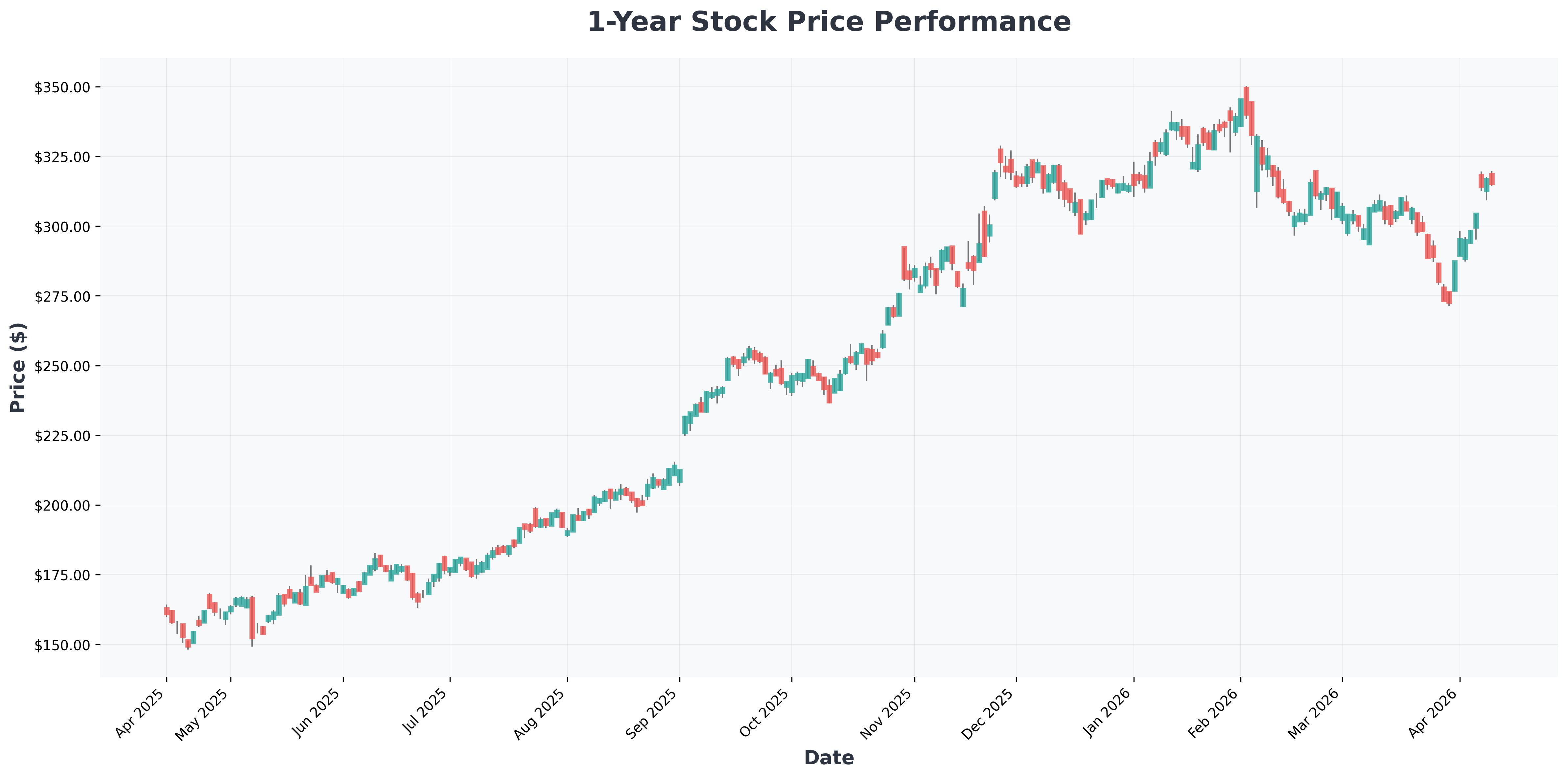
Technical Perspective: From a charting standpoint, a successful margin expansion narrative could help AMZN stock establish a strong support level above its long-term moving averages, potentially breaking through key resistance zones as earnings revisions turn positive.
Historical Context: This mirrors the playbook of other tech giants who shifted from pure growth to profitable scale—a transition that often creates tremendous shareholder value.
📚 Together with this article:
- For a broader look at tech stocks with strong fundamentals, see our comparison: 3 Tech Stocks Outshining Crypto: A Deep Dive into Alphabet, TSMC & Oracle.
- To understand how underlying commodity strength doesn't always translate to stock performance, explore: Silver Soars 35% But Mining Stocks Lag: Is This a Massive Mispricing?.
Final Verdict: The next decade for Amazon hinges on execution. If it successfully pulls these levers, the compounding effect of higher margins on its immense revenue base could indeed make it a market-beating investment. The risk lies in execution missteps or an economic environment that delays capex payoffs. For long-term investors, AMZN represents a bet on one of the world's best-operating machines learning to run more profitably.