A New Era at Berkshire Hathaway
The Oracle of Omaha has officially handed over the reins. With Warren Buffett's retirement as CEO effective Dec. 31, Greg Abel now oversees Berkshire Hathaway's (BRKA)(BRKB) day-to-day operations — and its massive $360 billion investment portfolio. 📌
While Buffett remains board chair, Abel wasted no time putting his stamp on things: he jettisoned 16 positions from the portfolio in the first quarter alone. But one thing hasn't changed — the unwavering belief in extreme concentration.
As of the Sept. 4 close, roughly 82% (nearly $294 billion) of Berkshire's invested assets sit in just 10 superstar stocks. That's not a diversification strategy — it's a conviction strategy.

Tech Is Officially on the Menu 🚀
The biggest shift under Abel's leadership? Tech stocks are no longer taboo.
Apple (AAPL) retains its crown as Berkshire's largest holding, but the new CEO has been aggressively building a stake in Alphabet (GOOGL)(GOOG) since the year began. The rationale is straightforward: Alphabet's Google search engine enjoys a virtual monopoly in global internet traffic, giving it an exceptionally safe foundation.
But the real excitement is AI. Since integrating generative AI and large language model capabilities into Google Cloud, that higher-margin segment has gone parabolic — posting 82% year-over-year sales growth in the June-ended quarter.
💡 Key insight: Abel's willingness to lean into AI infrastructure plays echoes the broader institutional pivot we've seen across Wall Street — a theme explored in our analysis of Meta's $135 billion AI bet and the neocloud beneficiaries positioning themselves for the next capex wave.
Financials Remain the Backbone 🏦
Even without Buffett at the helm, financial stocks remain a pillar of Berkshire's long-term approach. American Express, Bank of America, Moody's, and Chubb collectively account for nearly 29% of invested assets.
The beauty of financials lies in their cyclical ties. While these companies struggle during recessions, the non-linear nature of economic cycles rewards patient capital. Extended expansions allow Amex and BofA to prudently lend and generate meaningful interest income — exactly the kind of slow-burn compounding Buffett and Abel both favor.
The market is split on whether Abel's aggressive concentration — and his willingness to embrace tech — is genius or recklessness. Here's how both sides are framing the debate:
The 'Indefinite' Holdings Aren't Going Anywhere
Abel's concentrated positioning reinforces a critical message: Buffett's "forever" stocks stay put.
In Buffett's 2023 shareholder letter, he named eight indefinite holdings: Coca-Cola, American Express, Occidental Petroleum, and all five Japanese trading houses — Mitsubishi among them.
| Holding | Sector | Yield on Cost | Held Since |
|---|---|---|---|
| Coca-Cola (KO) | Consumer Staples | Astronomical | 1988 |
| American Express (AXP) | Financials | Very High | 1991 |
| Occidental Petroleum (OXY) | Energy | Moderate | 2019 |
| Mitsubishi (MTSUY) | Trading House | Growing | 2020 |
These aren't momentum trades — they're reasonably valued, dividend-paying businesses positioned to benefit from global economic growth over decades, not quarters.
📊 Technical Context
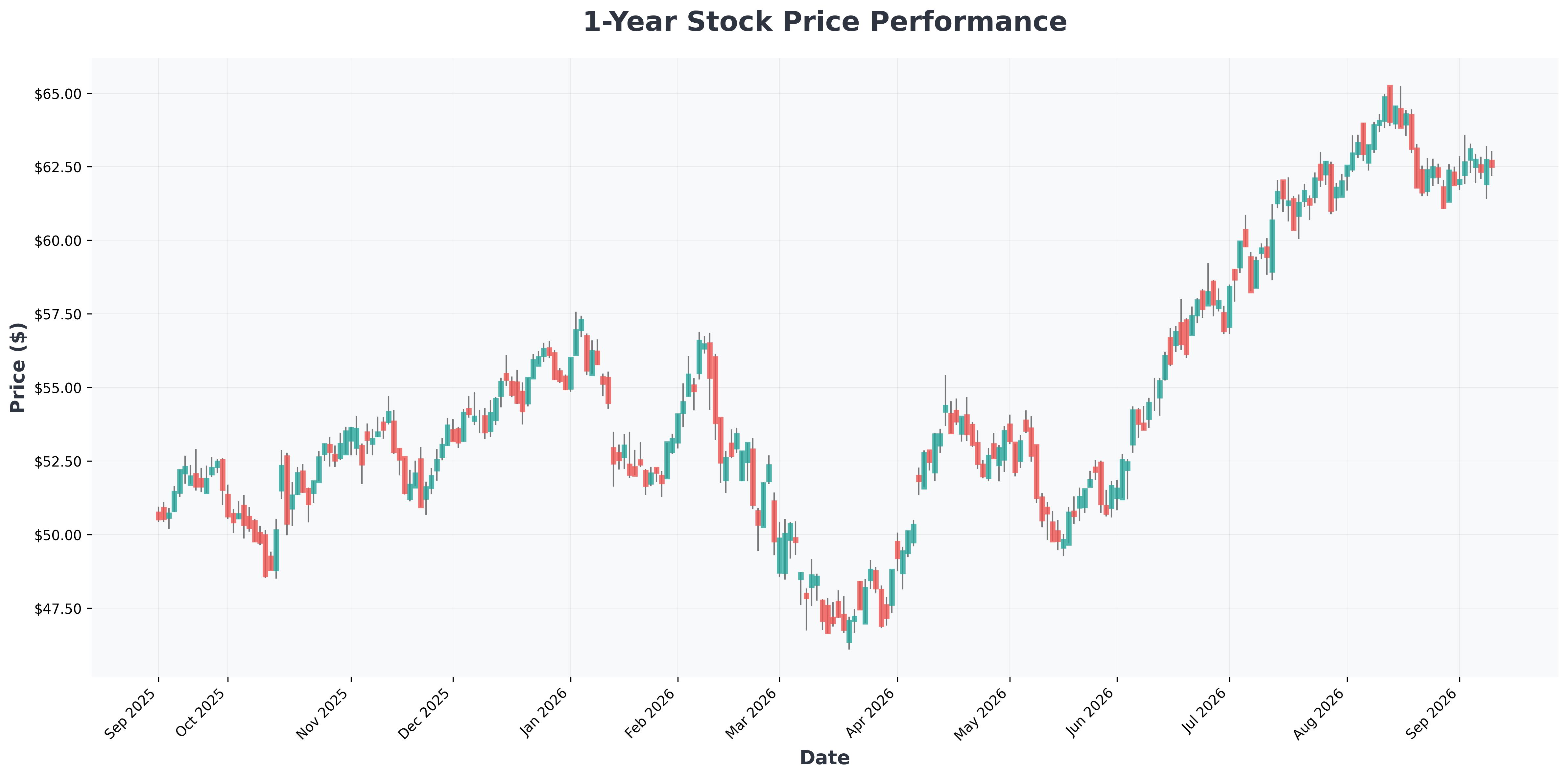
From a technical standpoint, Berkshire's Class B shares have consistently respected their 200-day moving average as dynamic support during pullbacks, while the $500 level has acted as a psychological resistance zone. Historically, periods of high portfolio concentration in Berkshire's history (such as the 1988 Coca-Cola build) have preceded multi-year outperformance cycles — though past patterns never guarantee future results.
🔗 Related Reading
For investors tracking the semiconductor and AI PC supply chain that increasingly intersects with Berkshire's tech exposure, our breakdown of AMD's Copilot+ PC chip launch and its strategic implications for the AI PC race offers useful context on where enterprise compute demand is heading.
📊 In-Depth Fundamental Analysis
| Company | Share Price | P/E Ratio | P/B Ratio | ROE | Operating Margin (OPM) | Revenue Growth |
|---|---|---|---|---|---|---|
| AAPL (Apple) | $334 | 38.32 | 45.40 | 148.75% | 32.62% | 16.40% |
| AXP (American) | $325 | 19.74 | 6.40 | 34.38% | 20.32% | 12.80% |
| BAC (Bank) | $63 | 14.53 | 1.60 | 11.20% | 38.30% | 16.80% |
| CB (Chubb) | $337 | 11.94 | 1.72 | 14.82% | 23.53% | 6.10% |
| CVX (Chevron) | $214 | 20.60 | 2.21 | 12.23% | 21.87% | 53.50% |
| GOOG (Alphabet) | $338 | 16.97 | 6.64 | 48.68% | 34.03% | 24.20% |
| GOOGL (Alphabet) | $341 | 17.13 | 6.70 | 48.68% | 34.03% | 24.20% |
| KO (Coca-Cola) | $88 | 26.53 | 10.51 | 42.05% | 34.87% | 6.70% |
| MCO (Moody's) | $472 | 29.96 | 27.01 | 76.93% | 49.47% | 15.10% |
| MTSUY (Mitsubishi) | $33 | 24.12 | 1.96 | 10.08% | 2.90% | 22.80% |
| OXY (Occidental) | $61 | 18.01 | 1.82 | 10.63% | 45.44% | 53.40% |
Scenario Analysis: Where Berkshire Goes Next
🟢 Best-Case Scenario
- Alphabet's AI momentum accelerates, Google Cloud sustains 50%+ growth
- Financial holdings benefit from a soft-landing rate environment
- Japanese trading houses gain from yen strength and commodity tailwinds
- Potential outcome: Portfolio compounds at 12-15% annually, outperforming the S&P 500
🔴 Worst-Case Scenario
- AI capex cycle cools, pressuring Alphabet's valuation multiple
- Credit deterioration hits Amex and BofA loan books during a recession
- Energy holdings (Chevron, OXY) struggle if oil slides below $60
- Potential outcome: Concentration amplifies drawdowns; 15-20% portfolio correction possible
The Bottom Line
Greg Abel is not reinventing Berkshire — he's refining it. The 82% concentration in 10 stocks isn't a bug; it's the feature that has made Berkshire one of the most successful investment vehicles in history. For retail investors, the takeaway is clear: conviction beats diversification when you truly understand the businesses you own.
⚠️ All investing involves risk, including possible loss of principal. This analysis is for informational purposes only and should not be considered investment advice. Always conduct your own due diligence.
