🏥 The $33.4 Billion Opportunity in AI-Driven Healthcare
The latest report from ResearchAndMarkets.com paints a clear picture: the computer vision in healthcare market is not just growing—it's exploding. From $4.37 billion in 2026 to a projected $33.4 billion by 2036, this represents a compound annual growth rate (CAGR) of 22.6%.
For investors, this isn't just another niche tech trend. This is a structural shift driven by three undeniable forces:
- Radiologist shortages — AI is filling the gap in image analysis.
- Precision medicine — Personalized treatment demands data-driven imaging.
- Autonomous surgery — Robotic systems are becoming standard in operating rooms.
But before you rush to buy every stock with "AI" in its name, let's separate the solid opportunities from the speculative noise. 📊

🧠 Deep Dive: Where the Real Growth Is Happening
The Software Gold Rush
By component, software holds the largest market share in 2026. Why? Because AI-powered image analysis and clinical decision support systems are the "brains" behind the entire ecosystem. Companies like NVIDIA Corporation and Google LLC are not just participants—they're building the foundational platforms.
Imaging Modalities Leading the Charge
- X-ray & CT: Mature markets, but AI is dramatically improving throughput.
- MRI & Ultrasound: High growth areas where computer vision reduces scan times.
- Endoscopy & Pathology: Emerging frontiers—AI can now detect polyps and cancerous cells in real-time.
The Cloud vs. On-Premise Debate ☁️
Interestingly, cloud-based deployment dominates in 2026 due to scalability and cost. However, on-premise is growing faster as hospitals prioritize data privacy and real-time processing. This creates a nuanced investment thesis: pure cloud players may win on volume, but hybrid solutions could command premium valuations.
Insight: Look for companies that offer validated, FDA-cleared algorithms. The barrier to entry is not just technology—it's regulatory approval.
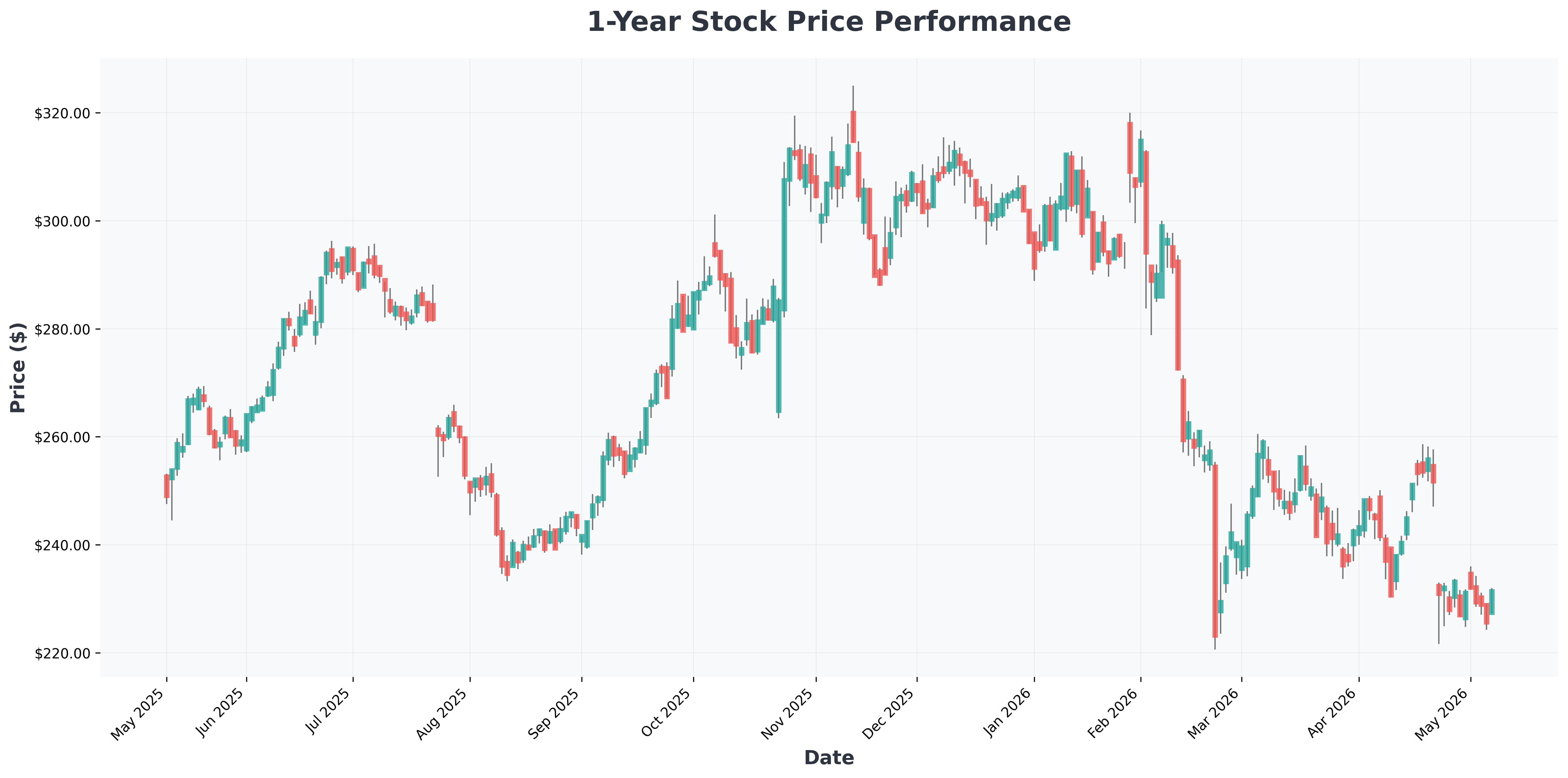
The market is bullish on AI diagnostics, but not everyone is convinced. Here's a debate between two seasoned healthcare analysts:

📈 Critical Metrics & Market Dynamics
| Segment | 2026 Share | 2036 Projection | Key Driver |
|---|---|---|---|
| Medical Imaging & Diagnostics | Largest | Dominant | Radiology automation, AI triage |
| Surgical Assistance & Robotics | Moderate | Fastest growing | AI-guided autonomous surgery |
| Patient Monitoring & Safety | Emerging | High potential | ICU video analytics |
| Drug Discovery & Research | Niche | Expanding | AI-powered pathology |
Geographic Winners 🌍
- North America (2026): Dominates due to advanced infrastructure, FDA pathways for AI devices, and strong VC funding in healthtech.
- Asia-Pacific (Fastest growth): Driven by China, India, Japan, and South Korea's massive hospital digitization programs and government AI initiatives.
The Backtesting Angle 📊
Historically, markets with similar CAGR trajectories (e.g., cloud computing in 2010-2020) saw early leaders capture disproportionate value. However, the healthcare sector adds a layer of regulatory friction—meaning the "fast follower" strategy often outperforms the "first mover." Companies like GE HealthCare and Siemens Healthineers have distribution networks that new entrants struggle to replicate.
For a broader perspective on how geopolitical shocks can impact sector rotations, check out our analysis on the Strait of Hormuz reopening and its effect on airline stocks.
📊 In-Depth Fundamental Analysis
| Company | Share Price | P/E Ratio | P/B Ratio | ROE | Operating Margin (OPM) | Revenue Growth |
|---|---|---|---|---|---|---|
| PHG (Koninklijke) | $27 | 23.26 | 2.01 | 8.36% | 6.17% | -4.70% |
| SYK (Stryker) | $287 | 33.21 | 4.90 | 15.20% | 17.82% | 2.60% |
| SMMNY (Siemens) | $20 | 17.79 | 2.04 | 11.19% | 12.55% | -1.50% |
| ISRG (Intuitive) | $448 | 54.55 | 9.08 | 17.23% | 30.87% | 23.00% |
| GEHC (GE) | $63 | 15.01 | 2.75 | 19.46% | 11.09% | 7.40% |
| MSFT (Microsoft) | $417 | 24.85 | 7.48 | 34.01% | 46.33% | 18.30% |
| IBM (International) | $231 | 20.39 | 6.57 | 35.77% | 13.81% | 9.50% |
| NVDA (NVIDIA) | $216 | 43.91 | 33.32 | 101.48% | 65.02% | 73.20% |
| GOOGL (Alphabet) | $398 | 30.38 | 11.58 | 38.88% | 36.12% | 21.80% |
| GOOG (Alphabet) | $394 | 30.06 | 11.48 | 38.88% | 36.12% | 21.80% |

🎯 Scenarios & Final Verdict
Best-Case Scenario (Probability: 35%)
- Regulatory acceleration: FDA creates fast-track pathways for AI diagnostics.
- Adoption curve steepens: AI becomes mandatory for insurance reimbursement in radiology.
- Market overshoots: Revenue exceeds $40B by 2036.
- Winners: NVIDIA, Intuitive Surgical, cloud-native AI startups.
Base-Case Scenario (Probability: 50%)
- Steady growth: CAGR holds at ~22%.
- Consolidation: Big players (GE, Siemens, Philips) acquire AI startups.
- Market reaches $33B as forecast.
- Winners: Diversified medtech conglomerates with AI capabilities.
Worst-Case Scenario (Probability: 15%)
- Regulatory backlash: Data privacy concerns slow adoption in EU and Asia.
- AI winter 2.0: Funding dries up for unprofitable healthtech.
- Market stalls: Revenue hits only $20B by 2036.
- Survivors: Only companies with recurring software revenue and cash reserves.
🛑 Investor Warning
Computer vision in healthcare is a high-conviction long-term theme, but it's not a short-term trade. Valuations in this space are already pricing in perfection. Be prepared for 30-40% drawdowns during market panics. The key is to buy on weakness, not strength.
For another high-stakes thematic play, check our analysis on Trump's $12B Project Vault and its impact on critical mineral supply chains.