The Nuclear Inflection Point 📌
The nuclear industry has officially entered what analysts are calling the 'Golden Age.' A new 363-page strategic report from ResearchAndMarkets.com maps a path from today's ~7 GW installed base to a potential 700 GW transformation by 2050, representing a $0.5 to $1.5 trillion industrial opportunity.
This isn't just about power plants anymore. Small Modular Reactors (SMRs) — factory-fabricated units typically under 300 MWe — are becoming the backbone technology for the 21st-century decarbonized economy. The convergence of AI/data-center load, re-industrialization, and net-zero targets is creating a demand shock that only firm, zero-carbon nuclear power can fill.
Why This Matters Now 🚨
- Policy Tsunami: The US aims for 400 GW by 2050, the EU has earmarked €241 billion, and the UK just committed £2.6 billion.
- Hyperscaler Demand: Amazon, Google, and Equinix are signing landmark offtake deals at $107-130/MWh.
- Cost Descent: Delivery innovation is targeting a drop from ~$125/MWh to $40-70/MWh.

The Six Critical Market Drivers 🏭
The report anchors its thesis on six key drivers that are accelerating the SMR timeline from demonstration to mass deployment:
- Delivery Innovation: Moving from bespoke EPC to shipyard and mass manufacturing (e.g., Prodigy, Aalo).
- Regulatory Evolution: The NRC's new 10 CFR Part 53 and the ADVANCE Act are streamlining licensing.
- Economic Viability: Willingness-to-pay from hyperscalers is proving the business case.
- Site Availability: Coal plant repowering (110 GW potential) offers ready-made sites.
- Capital Access: Sovereign wealth funds and the World Bank (reversing its ban in 2025) are opening the spigot.
- Ecosystem Maturation: 60+ companies are now in the pipeline, from fuel suppliers to EPC contractors.
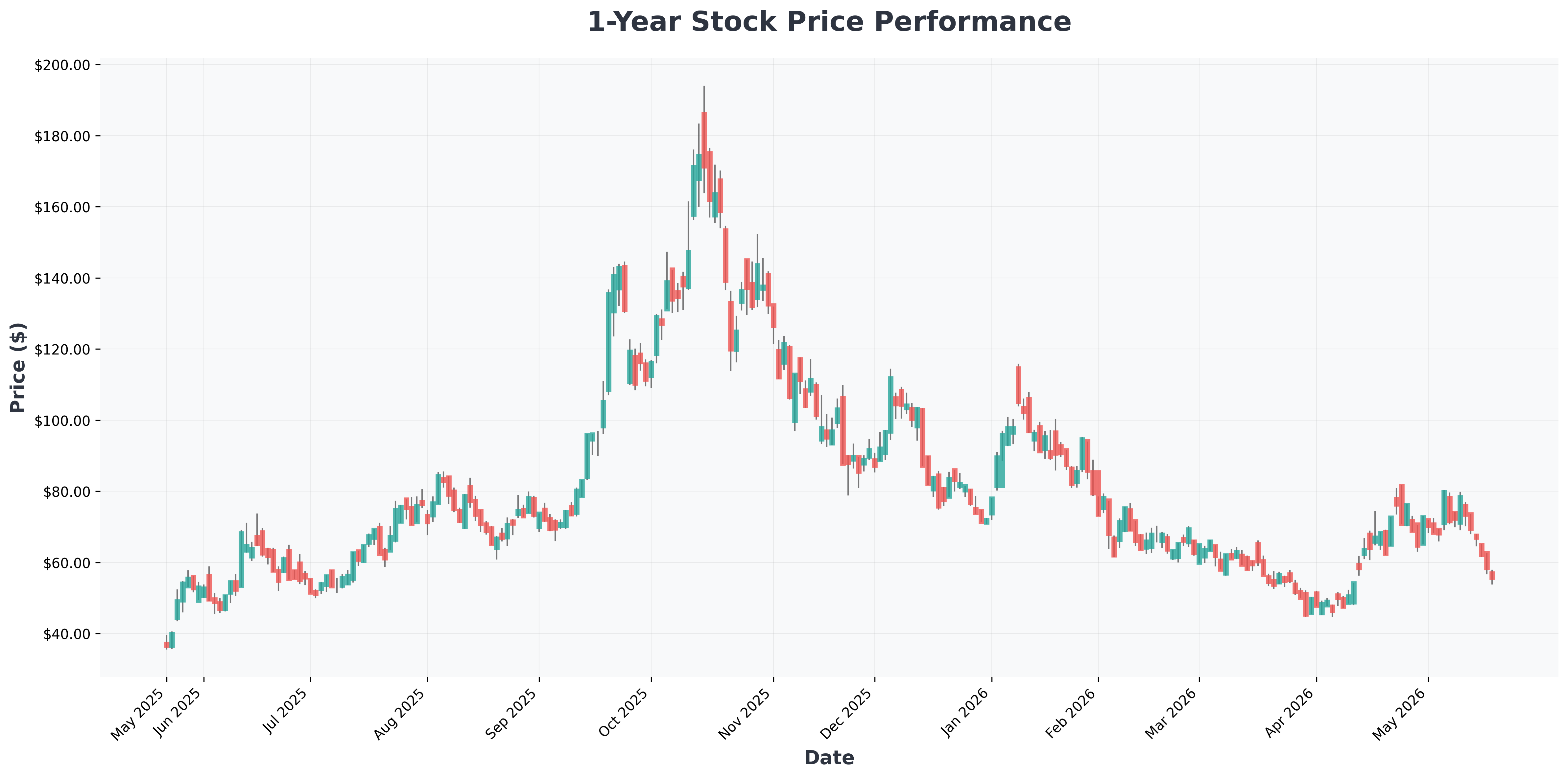
The market is pricing in a massive transformation, but not everyone is convinced. Here’s how the bull and bear cases stack up:

The Market-Access Matrix & Sectoral Demand 🎯
A standout feature of the report is its Market-Access Matrix, pairing four supply scenarios (Current 7 GW to Transformation 700 GW) with four demand scenarios. This generates accessible-market heatmaps showing North America (up to 424 GW) and Europe (up to 277 GW) as the primary battlegrounds.
Sectoral Deep-Dive: Where is the Demand?
| Application Sector | Estimated GW Demand | Key Insight |
|---|---|---|
| Data Centers | 75 GW | Hyperscalers are the anchor client, paying a premium for 24/7 clean power. |
| Coal Repowering | 110 GW | Reusing grid connections and skilled workforces. |
| Synthetic Aviation Fuels | 203 GW | Requires high-temperature heat, perfect for HTGRs. |
| Synthetic Maritime Fuels | 90 GW | Meeting IMO decarbonization targets. |
| Chemicals & Steel | 88 GW | Industrial decarbonization is a massive, untapped market. |
Investor Insight: The data center demand alone (75 GW) is a massive catalyst. For context, the entire US nuclear fleet today is ~100 GW. This is a new demand vector that didn't exist five years ago.
📊 In-Depth Fundamental Analysis
| Company | Share Price | P/E Ratio | P/B Ratio | ROE | Operating Margin (OPM) | Revenue Growth |
|---|---|---|---|---|---|---|
| OKLO (Oklo) | $62 | 0.00 | 6.72 | -8.87% | 0.00% | 0.00% |
| SMR (NuScale) | $11 | 0.00 | 2.86 | -83.05% | -10181.24% | -95.80% |
| XE (X-Energy,) | $29 | 0.00 | 0.00 | -60.15% | -178.81% | 43.00% |
| BWXT (BWX) | $203 | 54.10 | 14.51 | 29.03% | 10.38% | 26.10% |
| RYCEY (Rolls) | $16 | 17.82 | 36.96 | 623.50% | 20.33% | 16.60% |

Scenario Analysis: Best Case vs. Worst Case 🎲
🟢 Best Case (Transformation Scenario)
- Capacity: 700 GW installed by 2050.
- Cost: $40-70/MWh achieved through mass manufacturing.
- Key Trigger: Successful deployment of first-of-a-kind (FOAK) projects at Wylfa (UK) and Clinch River (US) by 2030.
- Winners: First movers like Rolls-Royce SMR, X-energy, and TerraPower. Hyperscalers who lock in long-term PPA contracts now.
🔴 Worst Case (Programmatic Scenario)
- Capacity: ~120 GW by 2050.
- Cost: Remains at $100-125/MWh due to regulatory delays and supply chain bottlenecks.
- Key Risk: HALEU fuel supply fails to scale, or a major safety incident during construction delays the entire sector.
- Losers: Latecomers who overpay for capacity. Investors in speculative developers without a clear path to revenue.
Conclusion: The Window is Open 🚀
The SMR market is at a genuine inflection point. The policy support is unprecedented, and commercial demand from hyperscalers is hardening into real contracts. For investors, the key is to focus on companies with proven technology, a clear regulatory path, and existing offtake agreements.