
While Nvidia and AMD grab headlines in the AI chip race, a critical enabler operates behind the scenes: memory. Micron Technology (MU), a leader in high-bandwidth memory (HBM) and DRAM, is positioned for what analysts call a "supercycle" driven by insatiable AI data center demand. 🚀
Despite a 239% surge last year, Wall Street argues the stock remains remarkably cheap, with earnings projected to nearly quadruple in fiscal 2026. This deep dive explores the powerful tailwinds, the valuation disconnect, and the debate surrounding this AI infrastructure essential.

The AI Bottleneck Isn't Just GPUs — It's Memory
Every Nvidia H100 or AMD MI400 accelerator requires high-bandwidth memory (HBM) to function at peak performance. As hyperscalers like Amazon, Microsoft, and Meta build out massive GPU clusters, demand for HBM has skyrocketed, creating a severe supply bottleneck. 🤔
Micron finds itself in an enviable position: it has reportedly sold out its HBM capacity through 2026. This supply constraint is translating into significant pricing power. Industry research points to potential DRAM and NAND price increases of up to 60% and 38%, respectively, in Q1. For Micron, this isn't just a cyclical uptick; it's a structural shift driven by a new, persistent form of demand.
The market is deeply divided on Micron's future. Here's the core of the debate between bulls who see a structural shift and bears who warn of history repeating itself. ⚔️
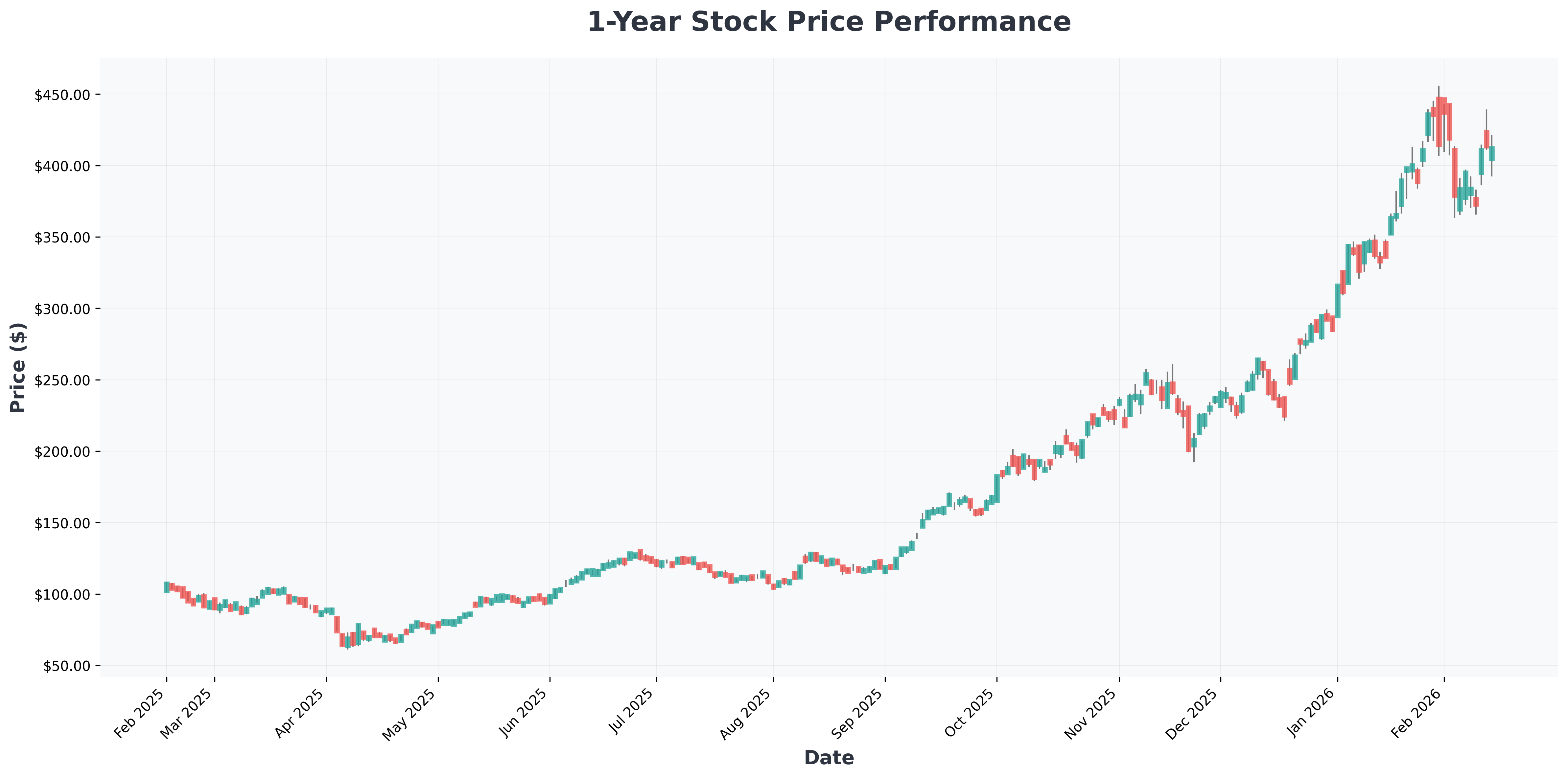

The Bull vs. Bear Case on a "Supercycle"
The consensus Wall Street estimate for Micron's fiscal 2026 EPS is $33.73, a staggering jump from $7.59 in FY2025. This implies over 340% growth, fueled by the HBM crunch. 💰
However, the memory market is infamous for its boom-and-bust cycles, casting a shadow on the "supercycle" narrative. This fundamental tension is at the core of the investment debate.
| Aspect | Bull Case | Bear Case |
|---|---|---|
| Market Nature | Structural shift to sustained AI-driven demand | Familiar cyclical patterns will reassert themselves |
| Demand Driver | Persistent HBM demand tied to GPU shipments | Weakness in PCs/smartphones could offset AI gains |
| Supply Dynamics | High tech barriers limit competitive supply | Competitors will ramp, leading to eventual oversupply |
| Valuation | Current forward P/E discounts growth potential | Stock already prices in much of the near-term optimism |
Micron's forward P/E ratio remains at a discount to other AI semiconductor leaders, a clear reflection of the market's cyclical concerns baked into its price.
📊 In-Depth Fundamental Analysis
| Company | Share Price | P/E Ratio | P/B Ratio | ROE | Operating Margin (OPM) | Revenue Growth |
|---|---|---|---|---|---|---|
| AMZN (Amazon.com,) | $200 | 27.89 | 5.23 | 22.29% | 10.53% | 13.60% |
| NVDA (NVIDIA) | $184 | 45.65 | 37.70 | 107.36% | 63.17% | 62.50% |
| GOOGL (Alphabet) | $301 | 27.85 | 8.77 | 35.71% | 31.57% | 18.00% |
| GOOG (Alphabet) | $302 | 27.95 | 8.79 | 35.71% | 31.57% | 18.00% |
| META (Meta) | $638 | 27.16 | 7.43 | 30.24% | 41.31% | 23.80% |
| MSFT (Microsoft) | $397 | 24.88 | 7.55 | 34.39% | 47.09% | 16.70% |
| MU (Micron) | $405 | 38.40 | 7.75 | 22.55% | 44.97% | 56.70% |
| AMD (Advanced) | $202 | 77.56 | 5.24 | 7.08% | 17.06% | 34.10% |

Investment Outlook: Weighing the Cycle Against the Trend
The central question for investors is whether Micron has fundamentally broken free from its historical cycles. The strength and duration of AI infrastructure spending suggest this upturn could be longer and more profitable than those of the past. 📌
For investors with a high conviction in the long-term AI megatrend and a tolerance for volatility, Micron represents a direct, strategic play on an AI essential. Its discounted valuation relative to its growth projection offers a compelling risk-reward profile if execution meets expectations.
For those seeking growth with more diversification, comparing broad-based growth ETF options like VOO vs. VGT may be a prudent alternative to single-stock risk.
Further Reading
Disclaimer: This content is for informational purposes only and does not constitute investment advice or a recommendation. All investment decisions carry risk, and readers should conduct their own research and consult with independent financial advisors if necessary. Past performance is not indicative of future results.